Hair and Books: A Designer's Review for Branded Merch
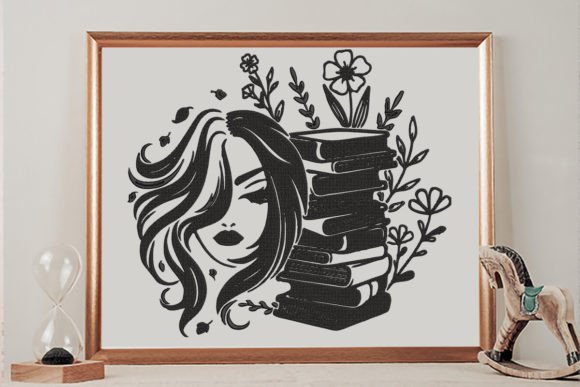
As an embroidery designer who has spent years digitizing logos and reviewing files for small business clients, I approach every new machine embroidery design with a critical eye. It is not just about whether a pattern looks cute on a screen; it is about how that digital embroidery file translates into a tangible asset for a brand. Today, I am reviewing "Hair and Books," a title that immediately suggests a niche intersection of beauty and literacy. Based on the product description, which invites us to "embellish your fabrics with this lovely embroidery design" for items requiring "whimsy and charm," this file positions itself firmly within the Beauty and lifestyle sectors. However, for a small business owner or an apparel decorator, the question remains: is this merely decorative, or can it serve as a robust tool for brand identity?
Visual Personality and First Impressions
The title "Hair and Books" combined with the promise of "whimsy and charm" signals a specific aesthetic. This is not a corporate, sterile logo. Instead, it feels handmade, friendly, and approachable. For a boutique salon, a mobile stylist, or a bookish café, this vibe is gold. In the world of commercial embroidery, conveying personality quickly is essential. When I visualize this design stitched out, I see it working best for brands that want to appear accessible rather than intimidating. The description mentions stitching on towels and pillows, which implies a level of detail and flow that suits soft goods. However, when we pivot to small business merch like uniforms or patches, we must evaluate if that "lovely" nature holds up under the scrutiny of professional application.
Real-World Applications for Small Business Merch
Let us imagine a real-world scenario. A local hair stylist who also runs a book club needs branded gear. How does "Hair and Books" perform? First, consider the embroidered patch. If the design elements are distinct enough, this could be a fantastic chest logo accent for a stylist's black work shirt. It acts as a conversation starter, instantly communicating the dual passions of the wearer.
For apron embroidery, this design seems ideal. Aprons in salons and bakeries often suffer from being too plain. Adding a touch of whimsy here elevates the perceived value of the service. Similarly, for tote bag design, this file could transform a simple canvas carrier into a piece of handmade product marketing. Imagine a bookstore giving these away as gifts with purchase; the bag becomes a walking advertisement.
We must also consider cap embroidery. While the description highlights home decor, adapting this for a curved surface like a baseball cap requires careful assessment of the design's width and density. If the elements are too spread out, they may not wrap well around the front panel. However, if scaled correctly, it could serve as a stylish uniform component for staff at a literary-themed beauty bar.
Critical Considerations for Production
While the potential is high, a professional review must address the pitfalls. The description notes the design brings a "touch of whimsy," which often correlates with intricate details or playful fonts. Here is where caution is required.
- Small Patch Sizes: If you intend to use this as a small label on a garment tag or a tiny pocket emblem, verify the line thickness. Fine details in "whimsical" designs can merge together when stitched at less than two inches wide.
- Stitch Density: High stitch density can make a design feel stiff, which is undesirable for custom apparel that needs to drape well. Check if the fill areas are too heavy for lightweight fabrics like linen aprons or cotton tote bags.
- Fabric Texture: The suggestion to stitch on towels implies the design handles looped textures well. However, on smooth, dark uniforms, ensure there is sufficient underlay to prevent the fabric from puckering or showing through light thread colors.
- Curved Surfaces: For cap embroidery, ensure the design does not have large horizontal spans that will distort over the curve of the front panel.
Furthermore, the product description cuts off at "comes with mu," likely meaning "multiple formats." This is a crucial missing piece of information. Before purchasing for commercial use, you must confirm the available hoop size requirements and file formats (PES, DST, EXP, etc.) to ensure compatibility with your specific machines.
Impact on Brand Identity and Customer Trust
Using a cohesive design like "Hair and Books" across various touchpoints strengthens brand identity. When a customer sees the same whimsical motif on your website, your finished product packaging, and your staff's aprons, it builds recognition. It tells a story without words. In the beauty industry, where trust and personal connection are paramount, a design that feels "charming" can lower barriers and make clients feel more comfortable.
Moreover, high-quality embroidery signals professionalism. A sloppy stitch job on a tote bag can cheapen a brand, but a crisp, well-executed version of this design adds perceived value. It suggests that the business owner cares about details, which translates to how customers perceive the quality of the actual services or products sold. For Etsy sellers and crafters, using such a design on design assets like printable mockups can also enhance online listings, making digital products look more tangible and desirable.
Practical Notes for the Embroidery Professional
Before running a production batch for a client, I recommend the following workflow specifically for a design with this profile:
- Test in Black and White: Remove color variables to check if the design relies too heavily on thread colors for definition. A strong design should hold its shape even in a single color.
- Verify Scaling: Stitch a test run at the smallest intended size. Does the text remain legible? Do the hair and book elements blur?
- Check Stabilizer Needs: Given the potential for varied fabrics (from terry cloth towels to structured caps), determine the correct stabilizer weight. Cut-away stabilizer is often safer for items that will undergo frequent washing, like staff uniforms.
- Create a Mockup: Generate a printable mockup for client approval. Visualizing the design on a specific garment helps manage expectations regarding placement and scale.
- Confirm Licensing: Since the goal is small business merch, explicitly verify the commercial licensing terms. Ensure you are allowed to sell physical goods featuring this design, not just use it for internal branding.
In conclusion, "Hair and Books" offers a delightful opportunity for businesses operating at the intersection of beauty and lifestyle. Its whimsical nature makes it a standout choice for handmade brands looking to inject personality into their merchandise. However, its success relies on thoughtful application. By respecting the limitations of stitch density, choosing the right fabrics, and verifying technical specifications like hoop size and file formats, embroidery professionals can turn this charming design into a powerful asset for their clients' growth.