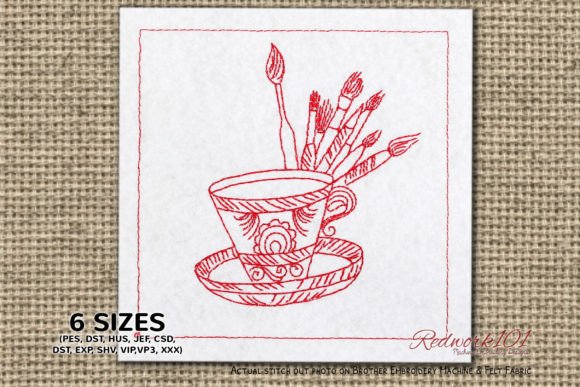
Coffee with Paint Brush Redwork: A Designer's Review
As I prepare my booth for the upcoming weekend craft fair, my table is covered in prototypes. I am looking for that one craft fair product that stops a customer in their tracks. Among the stacks of linen and cotton, the Coffee with Paint Brush Redwork design immediately catches my eye. There is something inherently charming about redwork; it speaks to a tradition of handmade quality while feeling surprisingly modern when paired with the right subject matter. This specific motif, blending the comfort of coffee with the creativity of a paintbrush, hits a sweet spot for my target audience of artists, teachers, and home decorators.
First Impressions and Market Appeal
The first thing I notice about Coffee with Paint Brush Redwork is its versatility. It does not scream "rustic" so loudly that it alienates modern buyers, nor is it so minimal that it gets lost on a busy display table. The redwork style, typically utilizing a single thread color against a neutral background, offers a bold yet elegant aesthetic. For a handmade product line, this is crucial. Customers at markets are often overwhelmed by loud, multi-colored designs. A clean, monochromatic look suggests sophistication and timelessness.
This design feels decorative and soft, perfect for the Tea and kitchen category. It evokes a slow morning, a creative break, and the warmth of a handmade gift. When I imagine this stitched onto a cream-colored linen tote, it instantly elevates the item from a simple bag to a statement piece. It tells a story about the person carrying it: someone who values both their caffeine fix and their artistic soul. This narrative is exactly what drives sales for an Etsy seller or a boutique maker.
Product Applications and Visual Impact
In evaluating where this machine embroidery design performs best, I have laid out several potential finished products. The tote bag design application is arguably the strongest contender. A large canvas or linen tote provides ample space for the design to breathe. The contrast of red thread on natural fabric is striking from across the aisle, drawing eyes to the booth.
Beyond totes, the apron embroidery potential is significant. An apron is a functional item, but when adorned with this motif, it becomes a piece of wearable art for the creative cook or the pottery enthusiast. Similarly, tea towel embroidery offers a lower-price-point entry for customers. These make excellent impulse buys when placed near the checkout counter. The simplicity of redwork ensures that even on textured towels, the lines remain clear and defined.
I am also considering this for smaller items like embroidered patch applications or fabric pouches. However, one must be careful with scale. If the design is reduced too much for a small coin purse, the fine lines of the paintbrush bristles might lose clarity. For caps, the curved surface presents a challenge; the design needs to be centered perfectly to avoid distortion. As a focal point on a pillow cover, however, it shines, adding a touch of whimsy to home decor.
Production Practicality and Batch Selling
From a production standpoint, redwork is generally a dream for high-volume sellers. With fewer color changes, the digital embroidery file runs faster, allowing me to churn out more inventory before the fair. The Coffee with Paint Brush Redwork appears to have a manageable stitch density. It does not look overly saturated, which means it will lie flat on lighter fabrics without causing puckering. This is vital for maintaining a premium look on a small shop product.
Photography is another key factor. In an era where online listings drive offline sales, this design photographs beautifully. The high contrast between the thread and the fabric creates a sharp image for printable mockup creation and social media posts. It looks professional in thumbnails, which is essential for competing as an Etsy seller. The visual appeal translates well to digital assets, helping to build brand consistency across my marketing channels.
Critical Considerations for Execution
Despite its strengths, there are technical aspects I must address before committing to a full production run. The description notes that "The Box Stitch shown in the picture is optional." This is a critical detail. If I choose to include the box, I must ensure the thread colors contrast sufficiently with the outer box if it is a different color, or skip it entirely for a cleaner look as suggested. Skipping the box might actually enhance the modern feel, making the coffee cup and brush the undisputed stars.
I must also pay close attention to fabric choice. While redwork is forgiving, thick fabrics like heavy denim or textured waffle weave can obscure fine details. On dark fabric, standard red thread may not pop enough; I might need to test a brighter shade or stick to light neutrals. Furthermore, since specific file details like exact hoop size and stitch count are not provided in the brief, I advise all makers to verify these specifications with the file provider before purchasing. Using the wrong stabilizer on a stretchy fabric could ruin the geometry of the paintbrush handle.
- Test on scrap fabric: Always run a sample on the exact material you intend to sell to check for registration issues.
- Check thread contrast: Ensure the red stands out vividly against your chosen background color.
- Review spacing: Confirm that the elements of the coffee cup and brush do not merge together after washing.
- Confirm hoop size: Verify the design fits your available hoops without needing excessive re-hooping.
- Inspect stitch density: Ensure the design is not too dense for lightweight linens used in tea towels.
- Create a real mockup: Do not rely solely on digital previews; see how the light hits the actual stitches.
- Commercial licensing: Always confirm you have the rights to sell finished products made with this commercial embroidery file.
Final Verdict for the Craft Fair Booth
The Coffee with Paint Brush Redwork is a winner for the creative entrepreneur. It bridges the gap between utility and art, making it an ideal candidate for a diverse range of finished product offerings. Its strength lies in its simplicity and its ability to connect emotionally with buyers who identify as creators or coffee lovers. By paying attention to fabric texture, stabilizer choice, and the optional box element, this design can become a staple in your inventory. Whether you are filling orders for a local market or updating your online shop, this motif offers the perfect blend of charm and professionalism needed to stand out in the crowded handmade marketplace.